Archive

Posts Tagged ‘FHA’

Saving Independent Manufactured Home Retailers and Communities

July 18th, 2011 Soheyla Kovach 1 comment
Manufactured Housing Association for Regulatory Reform = MHARR

Manufactured Housing Association for Regulatory Reform = MHARR

The manufactured housing industry has traditionally been able to deliver a quality product to home buyers at an affordable price because of its unique system of factory-based production combined with its network of independent retailers and independent land-lease communities.  This unique marketing and distribution structure has allowed the industry to prosper over the long-term, while serving and meeting the needs of American consumers of affordable housing.  Today, though, the independent retailers and communities that are the core of this system and make it work, face serious challenges at the national level that are not being addressed and resolved effectively — and have not been addressed effectively for years.

Because the manufactured housing industry is comprehensively regulated by the federal government, all of its various segments and all of its members are impacted directly by decisions made in Washington, D.C.  And, while all segments of the industry share certain common concerns at the national level, the specific interests, specific priorities and specific needs of all those segments in the nation’s capital, as shown by experience, are not necessarily identical.  For 20 years, though, since the post-production sector’s last independent association, the National Manufactured Housing Federation,  was merged into the Manufactured Housing Institute (MHI) to create an “umbrella group,” those specific interests and priorities have been swallowed by a dysfunctional process that has resulted in lowest-common-denominator positions and approaches to national-level issues that have not worked and have helped grease the skids for the industry’s prolonged decline.  Even worse, as part of this process, the particular interests of smaller independent post-production businesses have been overwhelmed and pushed aside by the power and influence of a few large corporate conglomerates.

A key part of the solution, therefore, to halt the industry’s long-term decline and restore it to production levels in the hundreds of thousands of homes, where it should be, must be the re-establishment of a dedicated, national post-production sector organization to effectively represent the specific concerns and interests of independent retailers and communities in the nation‘s capital, while working cooperatively with a single, united national producers’ organization on matters of joint concern.  And the sooner this happens, the better it will be for the entire industry.

As MHARR has pointed out before, the HUD Code industry is the only major industry in Washington, D.C. that keeps all of its different segments and interests under one umbrella organization.  The real estate/site-built housing industry, the automobile industry, the recreational vehicle industry, the marine industry and a host of others in Washington, D.C., all have separate associations for their production and post-production sectors.  The representation of these industries is organized along functional lines, recognizing that different sectors of the same industry, while united by certain over-arching concerns, have specific individual concerns that are best advanced by separate organizations that cooperate with each other as appropriate.  In an age of ever-increasing specialization and growth in the role of the federal government, this is just common sense.  By contrast, an “umbrella organization,” where different industry sectors, in the formulation of policy, are routinely expected to sacrifice their own interests to protect others, is a prescription for weakness, bureaucracy, ineffectiveness and failure, and lies at the root of the industry’s current sustained decline  — particularly its problems with public and private financing.

For example, with an independent association for retailers and communities, the industry’s current crisis dealing with the SAFE Act and Dodd-Frank mandates most likely would not exist, because those mandates should  — and undoubtedly would — have been addressed before they were signed into law.  Instead, as has been acknowledged by various sources and confirmed by reports from Congress, the ball was dropped on this major post-production issue, and the industry is now scrambling against difficult odds to secure after-the-fact fixes, with the survival of its small businesses on the line.

It’s no different with Fannie Mae, Freddie Mac, Ginnie Mae or the Federal Housing Administration (FHA).  An independent association of the nation’s retailers and community owners would not have let manufactured housing loans drop to a miniscule portion of the business of these agencies.  It would have been on top of the failure of these agencies to properly and adequately serve the needs of American families who rely on affordable manufactured housing with strong, decisive positions and follow-up from day one.  It would not have provided cover for manufactured housing detractors within the Government Sponsored Enterprises (GSEs) — who ran them into the ground purchasing risky sub-prime loans that people could not afford, while choking-off private financing for manufactured homes that people could afford.  Nor would it have spent years on a “select” program that is so “select” it’s virtually useless, while allowing manufactured housing loans to shrink to less than 1% of the GSE’s portfolios.

None of this should be news to any of the nation’s hard-working independent retailers and community owners who are struggling just to survive while sending their hard-earned dollars to Washington, D.C. to fund national-level representation that, with little or no regard for smaller independent businesses, has presided over a shrinking industry, while a handful of larger corporate conglomerates have benefited.

A dedicated post-production association in Washington, D.C. would advance the specific interests of independent retailers and communities with strong, undiluted positions that would be more targeted, more focused and, therefore, more effective, while working hand-in-glove with a single, united, dedicated manufacturers’ association to promote, advance and protect the industry’s broader interests in Washington, D.C.  But this will not happen until the nation’s retailers and community owners take the bull by the horns, exercise leadership, and demand change to resolve the fundamental structural problem that continues to handicap their representation — and the representation of the industry as a whole — in the nation’s capital.

In MHARR’s view, retailers and community-based entities face a clear choice — continued dysfunction and decline, or a change to a new national level industry representation structure to lead the industry back to real prosperity.  # #

Manufactured Housing Association for Regulatory Reform (MHARR)
1331 Pennsylvania Ave N.W., Suite 508
Washington, D.C. 20004
Phone: 202/783-4087
Fax: 202/783-4075
Email: mharrdg@aol.com

An MHMSM.com INdustry In Focus Exclusive Interview Report With industry consultant and once interim-president of MHI, DICK ERNST Part Three

August 10th, 2010 Industry Voices No comments

Dick Ernst discusses the SAFE Act and its impact on the Manufactured Housing Industry, and the extent of a potential boost from FHA financing

Reporter Eric Miller with Publisher L.A. ‘Tony’ Kovach for MHMSM.com

We conclude the interview begun last week with Dick Ernst.

MHMSM: You just mentioned the SAFE Act. How is that being viewed from inside the mortgage industry?

ERNST: There is lots of confusion. More so, probably, for the manufactured housing business. In the mortgage business, it’s pretty straight forward. I think for the most part, mortgage brokers are being squeezed out because you can’t do the yield spread premiums, charge higher rates to customers with more money going to the broker and things like that. So I think the mortgage brokers are being really squeezed on the mortgage side of the business. But it’s pretty straight forward for the mortgage business. If you operate under a national charter – if you’re a national bank, credit union or thrift – you have to register your people; your people don’t have to be licensed. But the people who go out there and originate loans for you have to be licensed within the state they are doing business with, so you’re dealing with someone who is going to be regulated.

In the manufactured housing business though, it’s much more confusing because of the nature of our business – with some of it being mortgage-type transactions and a large part of it being chattel financing. There are some issues related to the SAFE Act that really make it confusing, in my view, for the average retailer. But in that situation, I believe, the way our business has historically been handled using a retail installment contract or a three-party contract, I think that’s going to be very problematic for the industry going forward because that, technically, makes the dealer a lender and then he assigns that loan to another lender, usually at par value. So, I think that’s going to be problematic and I think our industry is still trying to figure out the right way to handle it.

Community operators, those that we just talked about, that are actually investing in their own paper – I don’t think there’s any question that they are lenders. They are deriving benefit because they are collecting interest on the loan they are providing to the customer. All the other issues related to the administrative aspects of what a retailer does, those to me become more secondary to the bigger issues of, are you getting benefit by earning interest on the loans you are making? Are you, in fact, utilizing a retail installment contract, which represents a loan contract that you are taking to the borrower and then assigning it to someone else? I think all those things are more important issues.

MHMSM: Is becoming licensed difficult? Would that possibly serve the customer better if some of the people in the industry did become licensed?

ERNST: Becoming licensed for people who are involved in the mortgage business is like becoming licensed to begin with, passing your mortgage broker’s license. You have to have certain training and understanding of the mortgage lending laws and what you can do and what you can’t do, and what truth in lending is, or [Real Estate Settlement Procedures Act] RESPA is; the various applicable federal laws and state laws and things of that nature. So you already have a background in it and familiarity with it and you have studied for it to pass your mortgage broker’s license. It’s more difficult for our industry, because typical retailers are not that heavily immersed in mortgage lending and, from what I am told, many of them do have difficulty in passing that license, or passing that test to obtain a license because they are dealing with something they haven’t done before. So I think for our industry, it’s going to continue to be problematic. But if you step back about eight or ten paces from this thing and take a big-view picture of that and say, “Is the customer going to be better-served by having someone who is licensed handling or involved in their loan transaction?” I think the answer is, yes. The real question is: what does mortgage lending have to do with doing a chattel transaction?

TK: Let me jump in here and follow up on the SAFE Act issue because a lot of what we heard at the DC meetings was the shear costs of meeting the SAFE Act requirements. I remember the Texas Association executive director saying that a quick numbers crunch with some of their people came up with a cost of 12 million dollars for licensing, and some small lenders figure it’s going to cost them two million dollars to meet all the requirements. You want to touch on that for a second, how that impacts the industry?

ERNST: From a lender’s perspective, doing business in this industry: Take a company that does business in multiple states. They have to actually have people licensed – anyone who touches that loan transaction, helps to either set payments or underwrite or establish terms on that loan – is going to have to be licensed within that state. Because every state now has their own SAFE Act they were required to put together. So if you have someone operating in multiple states – and let’s say you have loan officers who may get loan business from five, six, seven, eight, nine different states – they’ve got to pass the licensing for all of those. And so the compliance – and I heard one of the major lenders in our industry talk about their expenses like you say – that compliance, that licensing – that’s looking at every aspect of your business to make sure you are doing things properly, because compliance is their second largest expense after personnel. It becomes very costly, because the penalties for violating SAFE Act requirements or regulations can be severe. I think the big fear that most of the industry has is that because of the economic situation, you may have states that see this SAFE Act as a potential revenue generator for them both through the licensing fees as well as the audit fees, and potentially the fines and penalties that might be imposed and collected.

MHMSM: But most state laws are based on the national model, right?

ERNST: They are, but keep in mind, the national model – there’s no final rule that’s been published yet. It’s questionable whether a final rule will be published because the responsibility for the SAFE Act is being transferred from HUD over to the Consumer Protection Bureau, and whether HUD is going to ever issue a final rule or not is in question. Meanwhile, you’ve got states out there that have created their own, based on the information provided initially from the proposed rule from HUD; and keep in mind, those were minimum standards. So the state law had to at least contain the minimum standards provided for in the national SAFE Act that HUD had published. So you see other states that have imposed other things such as brick and mortar requirements. In other words, you have to have a physical office with someone specifically licensed in that facility where records can be stored, where customers can come in if they wanted to, to address issues, whatever it may be. That becomes a very expensive proposition. And then you begin to look at states and say, “Well, how much business am I getting out of there anyway and can I justify having an office there; and if I can’t, then I am going to pull out of the state?” So you’ve got all of those issues. And when you talked earlier about the cost for some, it’s, “What do I have to do to be in compliance in those 46 or 48 states or whatever it may be that I am operating in?”

MHMSM: Right. I could see where that would add to the cost substantially. You once served as interim President for the MHI – when was that?

ERNST: Back in 1998, the last of the big years when we had 373,000 shipments that year. The issues the industry faced then were significantly different. MHI had been trying for a number of years to pass the Manufactured Housing Reform Act, if you will, that addressed issues like installation and licensing and inspections and things of that nature, that really brought some significant issues and updated the HUD code, so to speak. The industry battled and we had conflicting views with MHARR and we couldn’t get anything done. In fact, we had Congress people tell us, “You guys better get your act together before you come back in here because we can’t have divisive opinions from both of you. We don’t know which way to go on this thing, so you better get your act together if you expect to get any help on this at all.”

That was what I would say was one of the positive things that occurred during that period I did serve as interim president. Walt Young was the chairman at that time and Walt directed me to sit down with Danny Ghorbani and meet with him and see if some of our disagreement wasn’t more personality than substantive and if we couldn’t both come together and compromise. We did end up coming together. We formed a coalition with MHARR and had a working group of people that worked in lock step, and we spoke with one voice as an industry for the first time in many years. That helped to get the Manufactured Housing Act of 2000 passed.

The question that’s often asked is: How did we face that issue? And I mentioned earlier that we had a third of our business that had below a 600 FICO score. And everyone likes to have an excuse; and excuse or not, there was an awful lot of Wall Street money, there were a lot of things going on at that time in the industry, a lot of consolidations, a lot of acquisitions going on. Champion Homes was very busy acquiring other companies, acquiring a lot of retail distribution networks – chains, if you will, of retail operations – and creating a really intensive, competitive struggle within the industry. You had other companies then trying to stay ahead of the game with Champion and trying to match them purchase for purchase; a lot of Wall Street money chasing the industry saying these securitizations are great, get us more, get us more, and people saw the acquisition of a chain of retail operations as a way to cement their ability to generate a lot of retail paper and more securitizations. As a result, underwriting went away pretty much. I remember lenders were paying as much as five points for a transaction to a retailer – and that’s to buy a 600 FICO score customer – and they were paying the retailer five points. That’s just not sustainable. It all came crashing down. Repossessions started occurring with great frequency and it became very difficult.

MHMSM: It seems to me manufactured housing can now be positioned as quality housing you can afford, unlike the so called site-built McMansions that too many couldn’t afford; but there’s talk the Obama administration may begin to look away from promoting and subsidizing homeownership in favor of pushing the rental housing market. Shouldn’t manufactured housing be positioned as an alternative to both? How can we move our message ahead the most rapidly and effectively?

ERNST: I think it should be positioned and I’ve often questioned in my own mind – you know, we like to claim that we’re the only form of non-subsidized housing. I don’t know if that’s a good thing or a bad thing. It’s always been touted as being a good thing, but at the same time, if you’re not a part of the government’s plans for providing or assisting people with housing, then that kind of puts you on the outside. I agree with you that the industry should position itself as a home that you can afford. You don’t always have to rent. But I think, and this is just a personal opinion, I still think that we’ve got to improve our image, and perhaps even the architectural appeal of our homes, so that they are more broadly accepted by what I will call the traditional home buyer. I think there are people who look for manufactured homes or who buy manufactured homes because they think that’s the only thing they can afford. At the same time, those same people may have had a manufactured home before or maybe currently live in one.

So I think that we’ve got to broaden our appeal. I think that we’ve got to offer good quality affordable lifestyles, whether it’s in a land-lease community or provide an architecturally comparable home for someone who wants to put it on a piece of real estate. And I think until we do that and can get the opportunity for urban and suburban placement of homes, because architecturally they are compatible with all other homes, I think that’s when we’ll begin to see a broader acceptance and a broader capability of maybe doing suburban developments with homes that just happen to be built in a factory, but they look like everything else.

MHMSM: You mentioned urban. I haven’t heard of many instances where there’s any of that. Is that a potential market for manufactured housing?

ERNST: There have been situations. In California, in Oakland and other places; there was one, I think, in Louisville and in Maryland and other places where non-profit groups actually did urban infill projects where there are a bunch of empty lots; and they had to change the architectural characteristics of the home for them to be compatible with surrounding products.

Also in Cincinnati; I remember Dan Rolfes did the project in Cincinnati. He worked with the mayor and several manufacturers and they did some gorgeous homes. Some of them were modular and some of them were manufactured. None of them looked like a mobile home. They all looked like houses and they were very compatible; they were really a little bit nicer than their surrounding properties, because it was in a much older area of the city. The experience from those has been that those homes have appreciated; they were very favorably priced, and it provided a place where young professionals could purchase a home, be close to the city, be close to the ballparks – that type of thing – without having to commute 30-40 miles.

MHMSM: Is there anything else you would like to share?

ERNST: I do want to clear up and offer what I think are some potential positives. The industry can get mired down in negatives pretty easily. We’ve been mired in negatives for a long time. I really think there’s an opportunity to have good open dialogue and meeting with people, at least at FHA, which I think could be a critical component of the whole finance picture for our industry. If we have a source, an insured source, who consistently… now just think about this for a moment. If we have a source, even with some tightened underwriting through the existing FHA guidelines, that will permit lenders to do the 620 to 660 or 680 FICO score customer, you could have local banks, you might even have regional banks or others, make those loans where they are not participating in the market at all. I think that ultimately then, that will help the over-all industry because I think it will make available an insured loan product. And I think that’s an important part of it, too, because if you have community banks or someone like that making a loan that’s insured by FHA, if they do have to repossess the home, then their loss will be contained to an affordable loss as opposed to one that might be fifty percent of the unpaid balance.

I’ve worked with community banks, and once a board of directors sees a loss where you might lose 50 percent of an unpaid principal balance on a particular home, the next action is, “We’re not doing any more of those.” So I think this could open the door for some portfolio lenders who say, “Ok, I could do a couple million dollars worth of those, or five million dollars worth of those; we’re going to be insured, and we can still buy decent quality paper in there if we service it properly.” That’s one thing. And we mentioned to FHA that I think it would be very helpful if the industry and MHI in some way could help FHA create some sort of an educational program for new or prospective lenders in the Title I program, and even Title II, to educate them about our industry and about our home products and give them the tools they need to be successful in it. We don’t need any more failures in this business.

TK: I agree with that. You kind of touched on something indirectly right there if you’ve got an extra minute. Part of what FHA was setting up was this “ten million dollars plus ten percent.” What do you see happening to that?

ERNST: Well, I personally thought it was an overreach, that it was excessive. Because some of the best lenders in the industry, those that have been successful – and I’ll use Triad as an example – while they may meet the ten million dollar net worth requirements, the additional ten percent of all the outstanding securities that they issue is very onerous. Because if you operate in 45 states or however many they operate in, and if you did an additional 300 million dollars a year in FHA business, that’s an additional 30 million dollars in net worth that you’ve got to have. So now all of a sudden, your net worth requirement goes up to 40 million. That’s just too onerous. What we tried to do is demonstrate to them that that’s not necessary. We went back to them and said no, the average loss on these homes for the lender, while it may not be ten percent – it’s more like 15 percent.

There are some capped expenses that FHA has: they’ll only pay $1,000 per section to move a house (it may cost $1800 per section to move it); they’ll only pay seven percent commission on the sale of a repossession. You know, seven percent on a $50,000 deal is not a lot of money, and you’re sure not going to get a lot of people interested. The standard is more like ten percent, so there’s additional exposure for the lender.

If their actual loss experience is fifteen percent, the ten percent additional is still an overreach. It’s up to us to prove that’s what the lender’s actual loss exposure is. Vicki [Bott] commented that their data reflected that it was closer to 30-40 percent; I think that’s what she said. Well, if it’s 30-40 percent, then there may be a reason to have those excess net worth requirements. I don’t believe that they are. And the unfortunate thing [about those statistics] is that really, the only the only people involved in FHA Title I financing have been Vanderbilt and 21st Mortgage to any degree over the last five to seven years, and they haven’t done a lot of it. Everything else they have is so old and really not even applicable to today’s marketplace and the way people do business. And there’s more of a distressed marketplace situation. I don’t believe it’s appropriate to use those numbers or that they are applicable, but we’ve got to be able to demonstrate that we’ve got some more recent history and some more recent data that says it’s closer to 15 percent. Then we can demonstrate that maybe they can relax the rules to some degree. I’m also working on some other things that I’m not at liberty to talk about that might be another approach on that.

TK: One last question after the one last question. How much of a bump do you think a successful FHA program would represent to the industry in terms of shipments? We’ve seen a lot of numbers on that. What would your take be?

ERNST: Well, I know there’s a lot of disagreement with this and people are going to say, “He’s nuts.” I think there could be a 10-15 percent bump in shipments. That’s 5,000-7,500 shipments, because of the ability to reach the heart of the industry’s customer, the 620-660 or 680 FICO score customer. That being said, there are a lot of other things that have to be right in the marketplace, too. Right now in a lot of areas, we’re still seeing excess inventory of site built homes, a lot of foreclosed homes, a lot of deep discounts on those properties – and that still represents competition. And we’re still looking at a lot of uncertainly in economic times. That’s keeping people from being [at] the sales center and looking to buy. Another important point is that there are going to be a lot of homeowners out there who have the scar on their credit reports of having had a foreclosure. If everything else – income, job stability, all the rest of the situation – is good for a customer, how is FHA going to look at that? We don’t know.

TK: That’s a great point. Dick, thank you so much. Eric do you have anything else?

MHMSM: No, that was a lot of great information.

TK: I want to really thank you personally for your time and all this expert insight. It was very valuable and I think the industry will appreciate it.

ERNST: Well you’re welcome and I hope it’s helpful and I hope you don’t get too [much] criticism of it.

TK: A little bit of criticism is a good thing. I think this is going to be well-received and just outstanding material. Thanks so much.

This concludes our three-part series of an Exclusive Interview Report with industry consultant and once interim-president of MHI, DICK ERNST.

An MHMSM.com INdustry in Focus Exclusive Interview Report with industry consultant and once interim-president of MHI, DICK ERNST, Part Two

August 8th, 2010 Industry Voices 1 comment

Dick Ernst Discusses Duty to Serve amidst the future of Fannie and Freddie and the potential return of private financing
Reporter Eric Miller with Publisher L.A. ‘Tony’ Kovach for MHMSM.com

We continue with the interview begun last week with Dick Ernst.

MHMSM: Even for Industry pros, there can be confusion with all the terminology, agencies, etc. Do you have a simple way or suggestion to help readers keep it all straight?

ERNST: I agree with the fact that it’s confusing. We’ve seen that recently in a couple of other blogs that were published. FHA is the Federal Housing Administration and it’s been around for years. The FHFA is the conservator for Fannie Mae and Freddie Mac and it was just recently put together to act as a conservator on behalf of the government. It deals only on the mortgage side of the business with Fannie and Freddie.

MHMSM: Will the FHFA go away when the future of Fannie Mae and Freddie Mac are determined?

ERNST: That is to be determined and I would expect that it probably would. I think it’s anybody’s guess right now. I don’t believe Washington really knows what’s going to happen to Fannie and Freddie; they still have huge issues and huge problems to work through. We’ve all seen the anticipated losses that the taxpayers are going to have to eat as a result of their involvement. I think there will be some privatization of that business, but the mortgaged-backed security market has to be alive and well and thriving. I think that there will be a continuing government role in some form of providing a marketplace, and it might focus on the low- to middle- and moderate-income families and affordable housing. That might be a better spot for them to play in. But it’s still too early to tell what’s going to happen to Fannie and Freddie and what role the government is going to play going forward, and whether FHFA continues to exist.

MHMSM: Any thoughts on the GSE’s Duty to Serve and how it can be enforced? Do you think the conservatorship excuse they have given holds water legally? If not, why not?

ERNST: There is a legal question and a practical question to be asked. Legally they are under an obligation, a legislative obligation, to create programs and it’s only enforceable to the extent that Congress is willing to hold their feet to the fire and say, “Look, you guys have an obligation to provide loan products to this industry because you’re only providing less than one percent of the financing that occurs when this segment of the housing market has historically averaged about 20 percent of the new single-family housing market. So it’s woefully underserved, and we passed legislation specifically for you to address it.”

That being said, the practical side of it is, who is going to put the pressure on it. Politically it could be suicidal because of the massive losses that Fannie and Freddie are taking. They would be saying “Oh, now we want you to go into this area of business even though there are some historical facts that this may have a higher default rate than what you are comfortable with.” I don’t think there’s many Congress people, including those on the housing finance committee, that really want to tackle this head on and hold Fannie and Freddie’s feet to the fire to say, “You’ve got to offer chattel financing, you’ve got to do this and you’ve got to do that.” There may be legislation there, but we’ve seen from a legal standpoint, obligations that the federal government has legislatively that they are just unwilling to address because of the potential political problems that exist for it.

MHMSM: Do you think that will be more palatable to address after they exit conservatorship, if that’s what happens?

ERNST: I think our industry is taking the right approach. We’ve always been big supporters of Fannie and Freddie, I guess in hope that they would step up to the plate and fill that Duty to Serve, and offer more programs and opportunities for a secondary market. We’ve made it clear to both agencies and the FHFA that the industry is willing to talk about skin in the game, talk about minimum credit qualities, talk about minimum equity requirements and have a good sustainable program. I don’t know that they’ve got the stomach at this point right now to take on something new. I think they’re overwhelmed with the size of the problems they have right now. That takes up the bulk of their time.

Once they’ve exited, I think we have to keep an open mind and say, “What is their obligation, what is their duty now to the housing industry, and what’s the role and how can we work within that?” I think the industry is taking the right approach to say, “Look, we’re not going to come out and say anything negatively against the agencies in terms of whether they should exist or not exist.” We continue to be hopeful that at some point it will provide us a source. We’re certainly not going to say anything about “take ‘em private and the government should get out of this business” because I think that it’s a marketplace the government has to play some role in; we just don’t know how big or how much.

MHMSM: What are some of the biggest barriers to providing chattel loan financing privately? How can the Industry move beyond some of the past history of experiences like Conseco?

ERNST: Right now there is no asset-backed securities market. Chattel financing, up until the credit crunch occurred, was predominantly either being funded by portfolio lenders, or the asset-backed securities market was still providing some. I’ve got to back up a little bit here. Clayton Homes’ Vanderbilt Mortgage and 21st Mortgage were both big players in the asset-backed securities market until the early 2000s; and then when the cost of securitization became so expensive, they felt their own existence being threatened because of the cost.

I can remember in the early 2000s where if someone had a billion dollars worth of securities to go to market, they wanted securitization for a billion dollars worth of manufactured housing loans, they had to come up with an additional 200 million dollars in over collateralization to get that deal done. There aren’t very many companies in this industry that could withstand that for any period of time because if you have to do that for two to three years, then all of a sudden, you’re talking about $600 million dollars in additional over collateralization, and a lot of companies didn’t have that kind of excess capital or excess assets.

The landscape changed dramatically for our industry after the blow-up, if you will, of the sub-prime credit purchases that we were doing in the mid to late 1990s, and I think it’s changed pretty dramatically, and I really don’t see it getting back to where it was. I think the asset-backed securities market will come back, but I think the disciplines many lenders have in their portfolio will open up an opportunity to do some securitizations, because the credit quality is so high and the default experience has been very good on that higher-credit-quality customer.

MHMSM: Will there be a process and what will the process be for public finance returning as an option?

ERNST: The process is a comfort level in the capital markets. I’m sure you’ve read where there’s beginning to be some opening up in the mortgage-backed securities market as well as some asset-backed securities classes like automobiles and other things like that, where there are some asset-backed securities deals being done. Slowly I think, because of demand or the need to invest capital, I think that ultimately there will be that opportunity to do some asset-backed securities with some pretty high-quality manufactured housing loans. Some of the more recent loans that were securitized by Countryplace Mortgage and Origin, some of those had average FICO scores of more than 700. It was pretty high-quality and for the most part, those have performed very well. I think it’s a matter of investor confidence and sitting on a lot of extra capital right now that they need to get invested; but they want to invest it in something that’s going to have predictable returns and a predictable experience.

MHMSM: The manufactured housing industry experienced an easy-money, no-credit-score bubble in the late 1990s. That was repeated more recently in the site-built housing industry. Have we learned our lessons? What are those lessons?

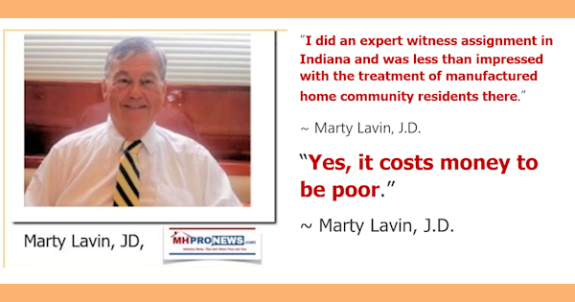
ERNST: Who do you mean by “we”? If you’re talking about the manufactured housing industry, I’d say absolutely we’ve learned our lesson. I think there’s been a lot of slicing and dicing, so to speak, of that business that was purchased prior to 2000 or 2001; and a lot of people looking at the credit quality look at the way business was being done back then.I mean, we got pretty loosey-goosey back in the late ’90; and when I say loosey-goosey, it’s been reported Marty Lavin (who is kind of a statistical nut and likes to look back at things) has indicated that more than a third of the businesses purchased in the late 90s had less than 600 FICO score business.

We know, based on experience now, that that business cannot perform. It’s not a matter of IF it’s going to repossess; it’s a matter of WHEN it’s going to repossess. When you’re dealing with low- to moderate-income customers, they have less leeway to be able to withstand an adverse event in their life, whether it’s an income interruption or whatever it may be; they have fewer assets, fewer reserves and less disposable income to withstand that event. I think we’ve learned.

The survivors do a lot of verifications now: they verify down payments, they verify income, they verify employment, they look very carefully at what the customer’s disposable income is going to be, what their other expenses are, what their family size is – all of those things now, I think, are being looked at a lot more closely. I think that the lower-quality credit customers are just not able to get those loans financed for the most part. If they do, through a company like 21st Mortgage, they’re going to have to have some significant equity in that loan or put up some collateral, perhaps land that they own or something like that, so they have more at risk. I think our industry has learned a lesson.

I can’t speak for the site-built industry. It’s been pretty devastating what’s happened to them. You’d like to think that everyone learns a significant lesson from this, but we all know there are a lot of cyclical events that occur in major markets like this, and we can only hope that everybody has learned a lesson.

MHMSM: What are your thoughts on efforts like Ken Rishel’s to move chattel ahead via establishing captive finance programs, especially for land lease community operators?

ERNST: I think the captive finance entities that Ken works with and a number of community operators that provide financing for their own customers is absolutely through necessity. You have to remember that land-lease communities have two potential benefits. Number one is, they tend not to focus so much on the profitability on the sale of the house. They want it to be profitable to some extent, but there’s less emphasis on the profitability and they want to have a loan that they can put in their portfolio. They’re willing to take a little bit more credit risk because they have much more control of that individual transaction with the site manager who can monitor what that customer is doing on a monthly basis and look for the signs that they may be having some issues; maybe look out there and see that the guy bought a new motorcycle or whatever it may be. Sometimes those can be things that create difficulty with a loan going forward. I think the captives are by necessity.

At the same time I think the captives in the future – and I don’t know how long in the future – but I think at some point in the future, there will be the ability to securitize those loans with someone with some pretty high leverage, or I should say low leverage. In other words, if you put a billion dollars in loans together, you might be able to re-coupe a half a billion dollars in capital. In other words, you might have to do a two-for-one type of deal because of the potential risk involved. Now, the larger communities – and to the extent they are well capitalized and have access to capital – I think you see folks like Hometown America and others who have done that and done it successfully, believe it’s necessary for their business model to support the communities, to create revenue-generating customers, revenue from those lots that they lease, and they think it’s important. At the same time, they’d love to be able to securitize those loans so that they don’t have all that capital tied up.

I think it’s going to continue; and the numbers that have been published – I have seen both from George Allen and others, and Tony’s numbers – indicate anywhere from three and a half billion to as much as six or seven billion dollars worth of paper that’s being held by these community owners. I do think the SAFE Act is going to cause everybody take a look at that and make sure they are doing business the right way; but at the same time, the captives are a necessary part of their business model.

Be sure to catch the third part of the MHMSM.com exclusive report with Dick Ernst when we discuss the SAFE Act and its impact on the Manufactured Housing industry and the extent of a potential boost from FHA financing.

Click for Part Three of this interview

Putting the Right Pieces in Place

August 5th, 2010 Industry Voices 1 comment

MHARR VIEWPOINT – AUGUST 2010
By Danny D. Ghorbani

MHARR logoThe first step in solving a problem — any problem — is admitting to yourself that there is a problem, that the problem is real and that it exists. The second step, and perhaps the most difficult, is to accurately assess and define the problem, so that one or more potential solutions can be considered, weighed and, ultimately, implemented.

By any objective measure, the HUD Code manufactured housing industry has a problem. Over more than ten years, production and sales have plummeted. From a modern high of more than 373,000 homes in 1998, production in 2009 fell to below 50,000 homes. The trend in the statistics, moreover, has been steadily downward, and appears — over the long-term — to transcend both positive and negative changes in the broader economy and the broader housing market. No amount of happy talk or glad-handing can paper over this fundamental fact — the status quo for the industry and its consumers is unacceptable, and must be changed.

But that is the easy part. The more difficult part is defining the problem as an avenue to arriving at solution(s) that will work. To start, we can identify what is not a problem — and that is our relations, as an industry, with Congress and the lawmakers in Washington, D.C., who pass the laws that govern our comprehensive regulation by HUD and the finance programs and entities that impact the ability of lower and moderate-income Americans to purchase industry products that they can afford without costly subsidies.

The track record of the industry and its representation in Washington, D.C. within this realm is quite good, and the reason is very simple — manufactured housing and the manufactured housing industry are favored by legislators in Congress. And for good reason. The industry provides jobs that will stay here in America, without outsourcing. The jobs that the industry provides are well-paying manufacturing jobs, typically located in the heartland of the country, where the success or failure of the broader economy is largely determined. The industry, moreover, produces homes that provide affordable home-ownership for American families at all income levels without tax-funded subsidies. The industry, therefore, provides a vital resource — affordable home-ownership — without asking for tax dollars, only parity with other types of housing in various government housing programs, such as FHA programs.

So, Congress has been good to the industry. In 2000, it passed the Manufactured Housing Improvement Act, to take manufactured housing into the 21st century and complete its legal and policy transition to the legitimate housing. In 2008, aware of the trouble that consumers were having with financing, Congress included two critical manufactured housing provisions in the Housing and Economic Recovery Act of 2008 (HERA) — the “duty to serve underserved markets,” designed to expand and improve private financing and end discrimination against manufactured housing by the Government Sponsored Enterprises (GSEs), and FHA Title I and Title II improvements, designed to expand and improve public financing for manufactured homes financed as chattel, real estate and as part of land-home packages.

These are all good laws, designed to promote the availability and use of affordable manufactured homes. These laws should have fostered an industry boom in the solid national economy of the years following 2000 — with an industry expansion involving hundreds of thousands of homes — and should be helping to foster an industry revival now, in a post-recession economy. At least that was the hope — and the theory. But, things have gone wrong, and therein lies the problem.

The problem is that none of these good laws are being implemented in the way that Congress wanted, and expected. The 2000 reform law has been gutted by HUD regulators and attorneys. There is no — and has been — no appointed program Administrator for most of the past ten years. Enhanced preemption has never been implemented. The MHCC — the real centerpiece of the 2000 law — is being turned into another rubber-stamp “advisory council.” Its proceedings have been taken over by program regulators and a large chunk of its authority was taken away when HUD — without any public comment — read catchall section 604(b)(6) out of the law, which required HUD to bring enforcement policy and practice changes to the Committee.

HERA-based FHA Title I improvements have fared no better. Inexplicably delayed for years, those improvements are now finally being implemented, but their impact appears likely to be minimized by recently announced Ginnie Mae requirements for the securitization of new Title I loans ($10 million minimum adjusted net worth plus 10% of outstanding manufactured housing mortgage-backed securities) that will severely restrict access to the program by the new lenders that will be needed to appreciably increase the availability and number of manufactured housing loans for consumers.

Similarly, the proposed rule to implement DTS published on June 7, 2010, represents a major disconnect with the intent and objectives of Congress that, if implemented, will predictably fall well short in helping to end the discrimination against manufactured homes by the GSEs, that lies at the root of the current near-unavailability of manufactured home financing.

Despite good relations with Congress, then, and good laws passed for the benefit of the industry and its consumers, the results have not matched expectations. The implementation of each of these laws, by relevant federal agencies, has not come even close to what Congress wanted. And in certain respects, these agencies are openly defying clear congressional directives.

The pattern, therefore, is clear. Congress tries to help the industry and, then … nothing — or close to nothing or, sometimes, worse than nothing. For an industry that is comprehensively regulated by the federal government and, thus, thrives or declines based on decisions made in Washington, D.C., this is — and has been — a prescription for trouble. As an industry, we have an obligation, to ourselves and to our consumers, to question — to ask why this is happening, and how it can be fixed before much of the industry falls by the wayside, leaving only a handful of survivors. MHARR is asked constantly why the industry is so impotent in Washington, D.C. in the face of continual resistance by regulators and other administrative types to the proper implementation of the good laws that Congress provides us. MHARR , in response, has studied this issue, going back over the history of the industry’s presence and involvement in Washington, D.C., dating back to the start of federal regulation, to find workable solutions, and will share its findings and suggestions in the September 2010 MHARR Viewpoint.

In MHARR’s view, the industry’s inability to implement critical laws despite strong Congressional support lies at the core of the industry’s difficulties, and needs to be addressed decisively.

MHARR is a Washington D.C.-based national trade association representing the views and interests of federally-regulated manufactured housing.

An MHMSM.com INdustry In Focus Exclusive Interview Report With industry consultant and once interim-president of MHI, Dick Ernst, Part One

August 4th, 2010 Industry Voices No comments

Reporter Eric Miller with Publisher L.A. ‘Tony’ Kovach for MHMSM.com

MHMSM: To help us set the stage for this interview, please tell us about your role at Finmark and how you and your firm serve the Manufactured Housing Industry.

ERNST: Finmark is a shortened version of Financial Marketing Associates. It’s a company I formed in 1983. When I first got into the manufactured housing industry and I started my own company, we represented banks and savings-and-loans and originated manufactured housing loans for them. Eventually, it’s evolved into my doing consulting work predominantly now, and putting together outside-the-box type transactions.

Some of the unique things I have done are a joint venture mortgage operation between three manufacturers and Wells-Fargo, and ran that operation for about three years. I also put together Countryplace Mortgage for Palm Harbor Homes 14 or 15 years ago now. I helped Textron create a commercial construction mortgage loan program and was working on a consumer program for them when the financial meltdown occurred and they decided not to move forward with it, and ultimately decided to get out of the manufactured housing inventory finance business as well.

The work I do is all related to the manufactured housing business. I like to put special deals together and provide consulting to manufacturers, retailing groups or finance entities that makes their projects possible.

MHMSM: What is the “big picture” to take away from the June 2nd Elkhart meeting?

ERNST: Many times the big picture gets missed based on individual comments and interpretations of how the meeting went. There are a couple of big picture take-aways from that meeting. One is, I found Dave Stevens, the FHA Commissioner, and members of his staff to be very open and candid about their willingness to work with the industry and help craft a program that can be sustained. I don’t think there’s any question that the FHA believes clearly that manufactured housing has a very important role to play in providing affordable housing to people in this country.

The issue that they have to deal with – and I think this goes beyond manufactured housing – is they have a very difficult task of reigning in the FHA mission of being the lender of last resort for low-end, low-quality credit customers to being a viable source of financing for qualified customers. They may run a broader spectrum than what Fannie Mae and Freddie Mac have done, but I really believe they want to play a serious role with Ginnie Mae to provide a good source of FHA insurance and have Ginnie Mae provide that secondary market for our industry.

I think we have some very smart people with extensive mortgage backgrounds willing to sit down, engage with us, understand our business better and work with us to craft a program that’s going to be sustainable.

The other take-away is that FHFA now is the only entity that we’re able to talk to with respect to Fannie and Freddie. It’s clear to me that they are using their conservatorship as another convenient excuse not to tackle something they have been directed to do through the Duty to Serve legislation. They are using their conservatorship and all of the other problems that they have in order to pretty much stay away from our industry. That’s a sad situation.

MHMSM: What is the big picture take-away from the follow-up at the MHI Summer Meeting with Vicki Bott [Deputy Assistant Secretary HUD] and other Industry and public officials?

ERNST: The Washington meeting came about as a result of FHA reaching out and saying we would like to put together a working group of lenders and interested parties who can help us understand your business – the way you originate it, the way you service it, the repossession and disposal characteristics – and understand your business better so we can address those things properly and still have a sustainable program.

Vicki mentioned that at some point in the not-too-distant future. they’re going to be sending out a TI letter to all mortgage lenders that are operating in the FHA space that anything below a 580 FICO score is going to require a ten percent down payment. That’s a huge jump for FHA because the current regulations require it to be anything below a 500 FICO score. From 500 to 580 – that should be a clear message that FHA is taking these defaults and delinquencies very seriously and they really believe they have to pay a lot more attention to the underwriting side of the business instead of being the lender of last resort.

Again, the take-away from that meeting is she came prepared. She brought several members of her staff. I wasn’t really expecting that. I thought there would maybe be one or two people, but she brought in four or five people including her head appraiser, because there can be appraisal issues and concerns about the program. They had specific questions in areas that they wanted to explore and get feedback from the industry.

I was very pleased with the quality of the meeting, the quality of the questions, the openness of our membership, the lenders who were involved and I’ve seen in some previous blogs comments that the people around the table were “the survivors” – and there is a lot of truth in that. The survivors weren’t the guys doing the bad acting in the late 90s that created some of the housing problems we had in the early 2000s.

I appreciated their candor. For the first time ever, when Bob Ryan, their risk officer… I mean that in itself has got to be amazing to people who track FHA. FHA has a risk officer. That’s pretty astounding to know that with billions and billions of dollars in mortgages that they’re insuring, and they’ve never had a risk officer before to assess what type of risk they are taking on and whether or not programs for site-built are sustainable as well. So when they came to us and said not only are you battling some perception issues, you’re also battling some real issues.

When provided some material on FHA Title II that the serious delinquent accounts, the number of defaults, 30, 60 or 90 day delinquents, all pretty much doubled the site-built business – the rates were double what the site-built business was, that’s a real problem. And it’s a problem our industry has to respond to and say we do need to tweak this program and make it actuarially sound and there are things both of us can do to make it work.

MHMSM: Vicki Bott comes to HUD with a Mortgage Background, Right?

ERNST: That’s correct. She came from Wells Fargo. She’s a very bright lady with a very inquisitive mind. The interaction I saw with her is “she gets it.” When someone responds to her, we’ve seen others that pretended they got it, but they didn’t really have much of a clue what we were talking about. I think that she really gets it from the depth of experience she has from her mortgage background.

MHMSM: If I’m just an average voter out there, I might listen to this and say if you have the qualified borrowers, why can’t the private market handle them? Doesn’t all this stuff exist because we want to allow people who maybe aren’t as qualified to have a home?

ERNST: I don’t think that’s it. It’s potentially a conflict and the way the FHA conventionally has been viewed as providing the opportunity for someone to get a home who wouldn’t otherwise qualify for a conventional program.

But I think you do that in a couple of different ways. The conventional programs from Fannie and Freddie, and even those from private institutions typically require 5, 10 or 20 percent down; and because of the private mortgage restrictions, those having higher credit scores are usually the only ones able to qualify. Does that mean that everyone else is unable to qualify? I don’t think that it does.

I made the comment during that Washington meeting that I believe the heart of our industry, that is the people who buy manufactured housing, typically will have between a 620 and 660 FICO score business. Those private companies that are in the marketplace today, with the exception of 21st Mortgage and perhaps Vanderbilt because of their funding capabilities with Berkshire Hathaway, the bulk of the companies are buying 680 plus FICO score business; and while they may do some with five percent down, they’re going to have to have a higher FICO score for the most part. The 620 to 680 FICO score customer is still a legitimate customer capable of buying a manufactured home and they deserve an opportunity for financing.

The other way FHA permits financing opportunities for those customers, is with a five percent down payment. Because a lot of those loans can be securitized with Ginnie Mae, the interest rates charged to the borrowers are actually going to be more advantageous than some of the conventional money or portfolio money that’s out there today. As a result of that, it provides a nice window for FHA to provide a way for people to buy homes that maybe aren’t being served today in most of the conventional markets for manufactured housing.

And I think provides a tremendous opportunity for our industry, for people in the land-lease communities as well. I think it gives them a potential source of financing because I really see the Title I program for chattel financing focusing more in the 600 or 620 to 680; and then to the extent that higher credit quality customers would drift toward an FHA loan, they would do so because of the interest rates or the down payment situation.


Be sure to catch the second part of the MHMSM.com exclusive report with Dick Ernst when we discuss the future of Fannie Mae and Freddie Mac, the recent housing bubble, the SAFE Act and its impact on the Manufactured Housing industry and more.

Click for Part Two of this interview

MHARR Comments on Grossly Inadequate DTS Rule

July 1st, 2010 Industry Voices No comments

MHARR logoAttached, for you information, review and use, are MHARR’s comments in response to the proposed Duty to Serve Underserved Markets (DTS) rule published by the Federal Housing Finance Agency (FHFA) – the regulatory agency for Fannie Mae and Freddie Mac — on June 7, 2010.

As promised earlier, MHARR has prepared and filed these comments — detailing the gross weaknesses and inadequacies of the proposed rule — as early in the comment period as possible, so that they can be shared and used as a model, basis, or support, as needed, for individual comments filed by industry members. Given the unparalleled importance of restoring and expanding the availability of private purchase-money financing for manufactured housing — to both the industry and its consumers — MHARR urges all industry members to file comments on this extremely important proposal. Comments are due no later than July 22, 2010. The Federal Register notice, available on the FHFA website (www.fhfa.gov), contains specific instructions for both electronic and mail/hand-delivery filing of comments.

In particular, comments are critically needed from retailers, community owners and finance companies that have first-hand experience with the current unavailability of consumer financing for the industry’s homes and the devastating impact this has had for the industry and consumers of affordable housing. FHFA needs to hear from community owners with vacant land-lease spaces they need to fill with homes that are primarily financed as chattel — but are excluded from DTS by the proposed rule. FHFA needs to hear from struggling retailers with willing, qualified buyers who cannot buy because there is no private financing. FHFA needs to hear from finance companies that want to enter the manufactured housing market, but effectively have been barred.

The proposed rule is as bad as it is — essentially tracking the demands, complaints and historical prejudices of Fannie Mae, Freddie Mac and anti-industry special interest groups — because not enough industry grass-roots members commented last year in response to FHFA’s original Advance Notice of Proposed Rulemaking (ANPR), allowing that proceeding to be swamped and dominated by detractors of manufactured housing. The industry simply cannot afford for this failure to be repeated.

The importance of the Duty to Serve, as a mechanism for expanding the availability of private financing for manufactured housing, is only underscored by the industry’s continuing and inexplicable inability to secure the full implementation of a workable FHA Title I public financing program. Notwithstanding a pledge by Ginnie Mae to lift its moratorium in the wake of the issuance of FHA June 1, 2010 Title I Mortgagee Letter, its June 10, 2010 announcement limiting future securitization of manufactured housing loans to those originated by lenders with a minimum adjusted net worth of $10 million plus 10% of outstanding manufactured home mortgage backed securities (MBS), will severely restrict its reach to only a very few companies. This means that the entry of new lenders into the manufactured housing market will be artificially and unnecessarily restricted, leaving consumers, retailers and others with the few limited choices that they have now, with little, if any, expansion of the current availability of FHA Title I loans.

The continuing inability of the industry to advance the implementation of both DTS and FHA Title I in Washington, D.C. (not to mention the Manufactured Housing Improvement Act of 2000) is preventing the industry and its consumers from participating in what should be a robust revival of the affordable housing. With many industry members in the nation’s capital during the week of July 11, 2010, the continuing unavailability of manufactured home financing — and specifically the inadequate implementation of DTS and FHA Title I and the roadblocks being placed in the path of both programs — should be the main focus of industry contacts with both Congress and the Administration.

Congress passed both DTS and FHA reform in the Housing and Economic Recovery Act of 2008 (HERA) to help the industry and its consumers. It is essential that the industry do its utmost to advance the full and timely implementation of these laws in Washington, D.C. in the weeks ahead.

Please let us know if MHARR can be of any further assistance to you on this very important matter.

Danny D. Ghorbani, President
Manufactured Housing Association for Regulatory Reform
1331 Pennsylvania Ave N.W., Suite 508
Washington, D.C. 20004
Phone: 202/783-4087
Fax: 202/783-4075
Email: mharrdg@aol.com

MHARR Letter to HUD – Federal Housing Administration-Insurance for Manufactured Housing

March 29th, 2010 Industry Voices No comments

Manufactured Housing Association for Regulatory Reform
1331 Pennsylvania Avenue, NW, Suite 508
Washington, DC 20004
202-783-4087
Fax 202-783-4075

March 5,2010

VIA ELECTRONIC FILING

Regulations Division
Office of General Counsel
Department of Housing and Urban Development
45 1 Seventh Street, S.W.
Room 10276
Washington, D.C. 2041 0-0001

    Re: Docket Number FR-5075-N-02
    Federal Housing Administration-Insurance for Manufactured Housing
    Re-Opening of Public Comment Period

Dear Sir or Madam:

The following comments are submitted on behalf of the Manufactured Housing Association for Regulatory Reform (MHARR). MHARR is a national trade association representing the views and interests of producers of manufactured housing regulated by the Department of Housing and Urban Development (HUD) pursuant to the National Manufactured Housing Construction and Safety Standards Act of 1974, as amended, 42 U.S.C. 5401, et seq. (Act).

I. INTRODUCTION

On September 15, 2008, the Office of the Assistant Secretary for Housing – Federal Housing Commissioner published a proposed rule to amend HUD’s regulations governing manufactured homes that secure Federal Housing Administration (FHA) Title I loans and Title II insured mortgages. Under the proposed rule, portions of the current regulations, 24 C.F.R. 201.21 and 24 C.F.R. 203-43f, which require such homes to be installed in compliance with HUD’s “Permanent Foundation Guide for Manufactured Housing” (HUD Handbook 4930.3G), HUD’s “Minimum Property Standards for One and Two-Family Dwellings” and other related criteria, would be deleted and replaced with new sections that would allow FHA to insure most HUD Code manufactured homes installed in a manner that meets or exceeds the requirements set forth in the federal Model Installation Standard (MIS) adopted by HUD on October 19,2007 pursuant to the Manufactured Housing Improvement Act of 2000 (2000 reform law).

MHARR submitted comments (incorporated herein by reference) generally supporting this proposed rule — subject to concerns related to the non-preemptive status of the federal Model Installation Standard and corresponding federal installation program – on October 17, 2008. MHARR generally supported the proposed rule because, as HUD correctly notes, the “acceptance of mortgages on manufactured homes installed in accordance with the Model Installation Standards would provide for greater flexibility of design, thereby permitting additional options for affordable housing.”See,75 Federal Register, No. 23, February 4,2010, at 5706).

Subsequently, on February 4,2010, HUD re-opened comments on the September 15, 2008 proposed rule, because implementation of the federal manufactured home installation program (adopted by final rule dated June 20, 2008), including HUD certification of complying state-law manufactured home installation programs and provisions for HUD enforcement of the federal installation standards in states without state-law installation programs has been delayed. As stated by HUD in its February 4, 2010 Federal Register notice regarding re-opening of the comment period for the proposed rule:

    “… there have been some delays in submissions of state certifications, in HUDts review and acceptance of state certifications and in the implementation of HUD’s program for states in which HUD will administer the installation program. As a result, there are several states in which there is not yet either a state-certified and fully-accepted installation program or an operational HUD-administered installation program.”

(Id. at 5706-5707).

Because of this delay, HUD now seeks comment on whether it should: (1) promulgate a final rule based on the September 15, 2008 proposed rule, applicable in a given state only at such time that the state has either an operational state-certified and fully accepted installation program, or operational HUD-administered program, or (2) “delay promulgation of a final rule based on the September 15,2008 proposed rule until all states and territories have an operational state-certified and fully accepted installation program or a HUD-administered program.”

II. COMMENTS

MHARR opposes any further needless delay in the implementation of the proposed rule and, therefore, supports the first option proposed by HUD — the promulgation of a final rule based upon the September 15,2008 proposed rule that would become applicable in each state when the state has either an operational state-certified and fully-accepted state-law installation program, or an operational HUD-administered installation program.

The 2000 reform law, as one of the centerpiece reforms of the HUD manufactured housing program, directed HUD to adopt and implement federal installation standards and a corresponding federal installation program, by 2005, in each state that had not yet implemented state-law installation standards and a state installation enforcement program. Today, some ten years after the adoption of the 2000 reform law and five years after the deadline established by Congress for the full implementation of the fallback federal installation program in default states (i.e., states without a state-law installation program), that program, by HUD’s own acknowledgement, is still not fully operational. As a result, installation oversight, that would benefit consumers and help expand the availability of consumer financing (by enhancing the value of manufactured homes), is still absent in many areas. This delay, in turn, has become an obstacle to the full implementation of the September 15, 2008 proposed rule that would similarly benefit consumers by expanding their affordable housing options and the availability of muchneeded FHA financing.

Very simply, there is no excuse for this long — and continuing — delay in the full implementation of the federal installation program, a reform deemed so vital by Congress that it alone is subject to a specific statutory deadline set forth in the 2000 reform law. The full implementation of the federal installation program, however, like many other manufactured housing program reforms mandated by the 2000 law (as previously documented by MHARR), has fallen victim to continuing mismanagement of the HUD program — in the absence of the non-career manufactured housing program Administrator provided by the 2000 law — that has skewed program priorities and returned the program to the controversial, non-consensus practices that the 2000 reform law sought to change. For example, while the full implementation of the federal installation program has been delayed for years, HUD program regulators, for the past three years, have devoted limited program resources to the establishment of a “shadow” in-plant inspection system and procedure, wholly outside of existing regulations and without the consensus procedures required by the 2000 reform law.

In the interim, as the HUD program has resisted the reforms of the 2000 reform law, production and sales of manufactured homes have declined by nearly 90%, to their lowest level ever, representing a catastrophic loss of affordable housing opportunities for lower and moderate-income American families, as well as the loss of thousands of manufactured housing industry and related jobs across the United States.

As a result, it is essential that HUD reverse the deterioration of the manufactured housing program and move forward, as rapidly as possible, to fully implement all of the 2000 law reforms, including the fallback federal installation program and final certification of compliant state-law programs.

Consistent with this and for all the foregoing reasons, HUD should adopt, as soon as possible, a final rule based on the September 15, 2008 proposed rule that would become effective on a state-by-state basis upon certification of a compliant state-law program or the implementation of an operational HUD-administered program in accordance with option one as set forth in HUD’s February 4, 2010 Federal Register notice.

Sincerely,
Mark Weiss
Senior Vice President
Manufactured Housing Association for Regulatory Reform
1331 Pennsylvania Avenue, N. W.
Suite 508
Washington, D.C. 20004
(202) 783-4087 (Office)
(703) 509-9489 (Direct)
(202) 783-4075 (Fax)
mmarkweiss@aol.com (Email)
cc: Mr. Danny Ghorbani, MHARR

Finance Delays Continue as Consumers and Industry Suffer

March 3rd, 2010 Industry Voices No comments

It is now nearing the two year mark since Congress enacted major FHA Title I manufactured housing program improvements and the “duty to serve underserved markets” (DTS) mandate as part of the Housing and Economic Recovery Act of 2008 (HERA). And while FHA and the Federal Housing Finance Agency (FHFA) have both taken steps toward implementing these badly needed initiatives to revive and expand the availability of public and private financing for manufactured home purchases, the fact remains that neither is yet in place. As a result, consumer purchase money financing for manufactured homes continues to be virtually unobtainable.

As industry members, consumers and, to a growing degree, Congress, are already aware, the near absence of consumer financing for HUD-regulated manufactured homes has had a devastating impact on both the industry and the lower and moderate-income American families that rely on manufactured housing as a key source of affordable, nonsubsidized home ownership. Since the enactment of HERA, this decline has only accelerated, bringing industry production in 2009 to an historic low, below 50,000 homes. This represents significant hardship for lower and moderate-income consumers and has resulted in the widespread closing of industry businesses and related job losses. In particular, this has impacted the industry’s smaller and medium-sized businesses that have traditionally relied on independent sources (i.e., non-captive or related corporate entity) of capital to finance consumer purchases. All the while, retailers report that they have customers who are willing and anxious to buy manufactured homes, but cannot obtain either private or publicly-supported FHA purchase loans.

In light of these unprecedented hardships, it is essential that real and substantive progress in expanding the availability of both public and private consumer financing, as mandated by Congress, be an urgent priority for HUD, FHA, FHFA, the GSEs and every other relevant arm of the federal government — to be achieved as quickly as possible. Accordingly, while FHA has issued Mortgagee Letters regarding the HERA manufactured housing program improvements, it needs to publish a final Title I rule so that the Ginnie Mae moratorium on the securitization of new manufactured housing loan can finally be lifted.

Similarly, while FHFA deserves credit for taking initial steps toward rulemaking to implement DTS, time remains of the essence for the industry and its consumers. With a steadily growing number of business failures and bankruptcies among manufacturers, retailers, communities and others — stemming largely from the unavailability of private consumer financing – the more favorable financing climate that DTS would promote and provide is urgently needed to ensure the survival of the industry and the supply of decent, affordable, non-subsidized housing for Americans at all income levels. And let there be no mistake, continuing and even intensified industry pressure will be needed to advance DTS in a form that would actually benefit the industry and the consumers it serves, as both GSEs made it quite clear in their DTS comments that they will seek to water down DTS as much as possible and delay its full implementation for as long as possible.

Beyond the HERA based Title I improvements and DTS, however, there are other avenues — that have been suggested by MHARR and its finance advisors — through which relevant federal agencies and the GSEs could quickly assist the industry and the consumers of affordable housing that it serves, without going through a long and tortuous process.

First, as MHARR suggested and explained in its September 1, 2009 DTS comments, the GSEs should — on an expedited basis – be authorized to securitize FHA Title I manufactured housing loans. At present, the GSEs securitize only FHA Title I1 manufactured housing loans. FHA Title I loans have historically been securitized by Ginnie Mae, but that agency, in the absence of a final rule to implement Title I program changes mandated by HERA, has imposed a moratorium on the securitization of Title I loans. An extension of the GSEs’ securitization authority to FHA Title I loans would help to alleviate the unnecessary constraints that have been placed on the manufactured housing finance market – even after the Ginnie Mae moratorium is ultimately lifted — and would be consistent with Congress’ strong support for strengthened and expanded manufactured home lending, as illustrated both by the duty to serve and by HEM’S increased FHA manufactured housing loan limits.

Second, because affordable manufactured housing serves a market comprised largely of lower and moderate-income Americans, most purchasers do not have — and in today’s economic conditions, cannot obtain – the cash necessary for a 20% down payment. This effectively excludes them from the manufactured housing market due to the unavailability of private mortgage insurance (PMI) in the wake of the recession. Fannie Mae, however, has given some indication that it believes it has the authority and ability, under its Charter, to self-insure manufactured housing transactions with a greater than 80- 20 loan-to-value ratio, thus obviating the need for PMI. MHARR has supported and encouraged such an initiative, and is continuing to explore this further while urging the federal government to expeditiously take the steps necessary to authorize both GSEs to self-insure such obligations.

Obviously, in addition to these steps, all relevant federal agencies and related organizations, such as the GSEs, should immediately consider – and should be encouraged and pressed by the industry to consider – other and further means, either temporary or permanent, to restore and expand the availability of private financing for manufactured housing consumers.

In MHARR’s view, with the access to virtually all types of financing — both public and private – now effectively controlled by federal entities, the industry in Washington, D.C. (in addition to reform of the federal program) should be concentrating on pressing those entities to comply with the financing improvements legislated by Congress in HERA, as quickly as possible, rather than side-tracking limited industry resources and political capital to other less critical matters.

MHARR is a Washington D.C.-based national trade association representing the views and interests of producers of federally-regulated manufactured housing.